Symptoms & diagnostics
Cancer symptoms in dogs and cats: what to watch for
Signs of cancer in pets are often vague — weight loss, tiredness, a cough or a limp. Which changes to show your vet, which need urgent care, and how to keep useful notes at home.
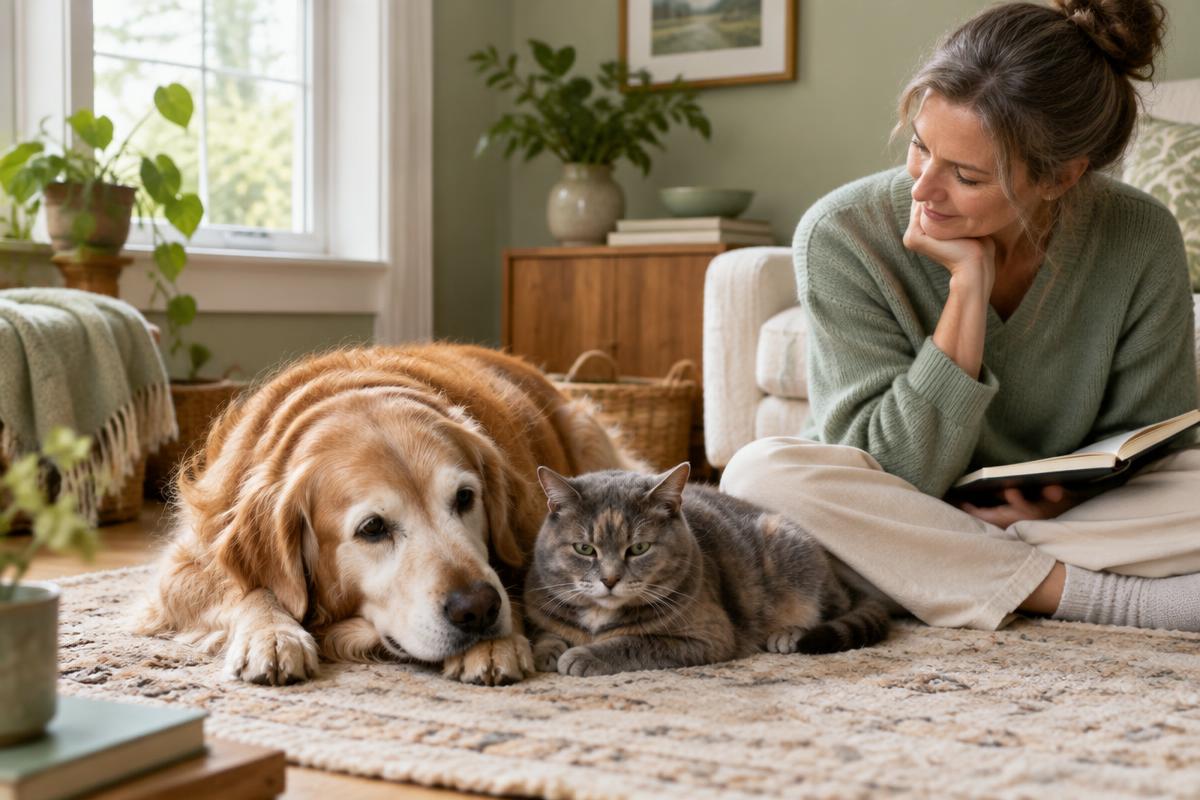
Cancer in dogs and cats rarely announces itself with one dramatic symptom. More often it shows up as gradual change: weight loss, less interest in play, a new lump, a cough or a limp. None of these signs means cancer on its own — each has many other possible causes. The key rule: a change that doesn't settle within one to two weeks, or keeps getting worse, should be checked by a vet. An early visit doesn't mean bad news; it simply helps find the cause sooner, whatever it turns out to be.
The short answer
- Cancer signs overlap with those of many other illnesses.
- What matters is a persistent change in your pet's usual behaviour and wellbeing.
- Cats hide illness, so take even "small" changes in a cat seriously.
- Some signs need emergency care — see the list below.
Signs worth showing your vet
Veterinary cancer organisations use a similar list of warning signs:
- Lumps and swellings that persist or grow. Read more about a lump on a dog and a lump on a cat.
- Sores that don't heal, especially on the ears, nose, lips or toes.
- Unexplained weight loss, even if appetite seems normal.
- Reduced or changed appetite, or becoming picky.
- Difficulty eating or swallowing, drooling, bad breath or blood on toys.
- Bleeding or discharge — from the nose (especially one nostril), mouth or genitals, or blood in urine or stool.
- Lethargy and tiring easily, reluctance to walk or play.
- Persistent lameness or a bony swelling, especially in large-breed dogs.
- Coughing, breathlessness or fast breathing at rest.
- Toilet changes: straining, frequent urges, ongoing vomiting or diarrhoea.
- A swollen belly or enlarged lymph nodes (for example under the jaw or behind the knees).
What's different in cats
Cats rarely show pain or weakness. Watch for weight loss, an unkempt coat because they've stopped grooming, hiding, appetite changes and long-running digestive problems. Chronic vomiting, diarrhoea and weight loss in a cat deserve a full work-up, partly because intestinal lymphoma can look like this. See Lymphoma in cats.
When to get urgent help
Don't wait for a routine appointment if your pet has:
- collapsed, is suddenly weak, or has pale or white gums;
- a belly that is swelling quickly;
- laboured or open-mouth breathing (always urgent in a cat);
- repeated vomiting or can't keep water down;
- difficulty or inability to urinate, or strains without result;
- a seizure;
- severe pain or can't get up.
Keeping notes at home
Notes help your vet see trends that are hard to spot in a single visit:
- Weigh your pet every week or two on the same scales.
- Note appetite and drinking — what was eaten and how much.
- Photograph any lump next to a ruler every one to two weeks.
- Video the cough, limp, odd breathing or behaviour — symptoms often "disappear" at the clinic.
- Count breaths per minute while asleep and write it down if your vet has asked you to monitor breathing.
What happens at the vet
Your vet will examine your pet, take a history and will probably suggest blood and urine tests. Next steps depend on the findings: X-rays, ultrasound, or sampling cells or tissue. Oncology guidelines stress that a suspicion of cancer is the start of the diagnostic process, not the end. Many cancers in pets can be treated or managed, and pain, nutrition and quality of life are assessed and supported from the very beginning.
Questions to ask your vet
- Apart from cancer, what could be causing these signs?
- Which tests do you suggest first, and why?
- How soon should they be done?
- What should I watch for at home, and when should I call you back?
- How often should a pet of this age have check-ups?
Frequently asked questions
At what age should I start worrying?
Cancer risk rises with age, but some cancers also occur in young animals. Persistent changes are worth checking at any age.
Can a blood test detect cancer?
Routine blood tests show how the body is coping but usually can't confirm or rule out cancer. A diagnosis generally needs cells or tissue to be examined.
Do regular check-ups really help?
Yes — a vet may notice an enlarged lymph node, a growth in the mouth or a weight change before you do. Ask your clinic how often older pets should be seen.
Important
This article is for general information and is not intended for self-diagnosis. The signs listed occur in many conditions. An online consultation can help you prepare for tests and understand results, but it does not replace an in-person examination. If you see emergency signs, go to the nearest clinic.
Sources and further reading
- AAHA: 2026 Oncology Guidelines for Dogs and Cats (opens in a new tab)
- AAHA Section 3: Tumor Diagnostics and Staging (opens in a new tab)
- AAHA Section 7: Supportive and Symptomatic Care (opens in a new tab)
- Cornell Feline Health Center: Lymphoma (opens in a new tab)
- Merck Veterinary Manual: Cancer Treatment in Animals (opens in a new tab)
- Veterinary Cancer Society: Pet Owner Resources (opens in a new tab)
Updated 20 October 2026
Related articles
Symptoms & diagnostics
Mammary Tumors in Dogs and Cats: Signs, Diagnosis and Treatment
A lump near a nipple cannot be assessed by touch alone. Learn how mammary tumors differ in dogs and cats, which tests may be needed, and how surgery and follow-up care are planned.
8 min read

Symptoms & diagnostics
Tumor biopsy in dogs and cats: what happens and why it matters
A biopsy helps identify a tumor and guide treatment. Learn how tissue is collected, what to expect on the day, how to care for the wound, and what the pathology report can tell you.
7 min read

Symptoms & diagnostics
Cytology or biopsy: how tumour tests differ
Cytology and histopathology answer different questions. What each test shows, how long results take, why a biopsy before surgery can matter, and what to do if the answer is unclear.
5 min read